Restored 1968 combine showcases six decades of innovation
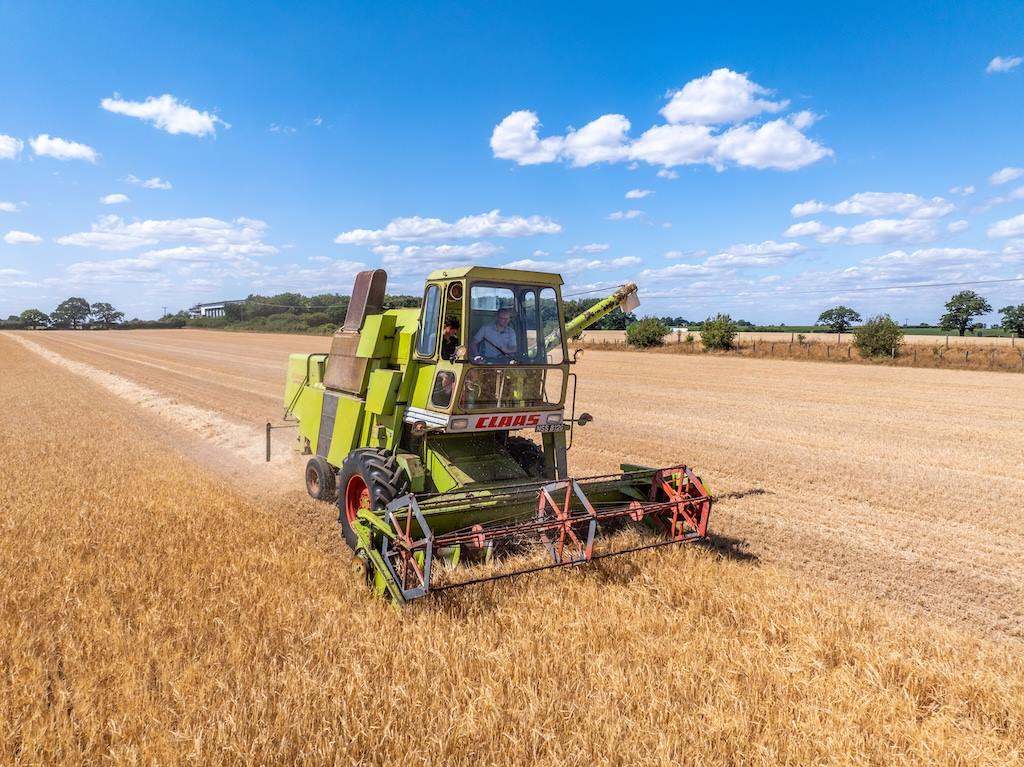
Few manufacturers can demonstrate the evolution of harvesting technology quite as effectively as CLAAS did in Suffolk recently, where a restored 1968 SENATOR worked alongside both a 1953 CLAAS SF and a current TRION 720.
The occasion celebrated the return to work of the 200,000th CLAAS combine ever produced—a machine that represents an important milestone in the company’s industrial history.
Presented by founder August Claas to Scottish farmer John Steven in August 1968, the SENATOR symbolised a period of rapid growth that saw the manufacturer double its cumulative combine production in just six years. More significantly, it marked the arrival of the company’s now-iconic Seed Green colour scheme and reflected the engineering vision of Helmut Claas during a transformative period for the business.
After spending decades harvesting in Scotland, the machine was returned to CLAAS UK’s headquarters at Saxham in 2025. Rather than undertaking a cosmetic rebuild, technicians focused on restoring full working capability while preserving the machine’s original character. Thanks to continued parts availability from the CLAAS World Parts Centre, many original components were sourced to complete the project.
The combine returned to commercial harvesting on 24 July, cutting approximately 20 tonnes of wheat in five hours. In a symbolic contrast between past and present, its operation was simultaneously monitored through the CLAAS connect digital platform.
The demonstration also highlighted the remarkable gains in harvesting productivity achieved over seven decades. The 1953 SF delivered around four tonnes per hour, while the modern TRION 720 achieved approximately 40 tonnes per hour under similar conditions.
For today’s agricultural machinery industry, the event illustrated not only the durability of well-engineered machines but also the importance manufacturers increasingly place on heritage. It also demonstrated the value of long-term parts support—an area where OEMs continue to differentiate themselves as customers retain machinery for longer operating lives.
Related news:
Partnership Links Harvest Loss Measurement With Automated Combine Settings