Comment – The weather is back in the driving seat
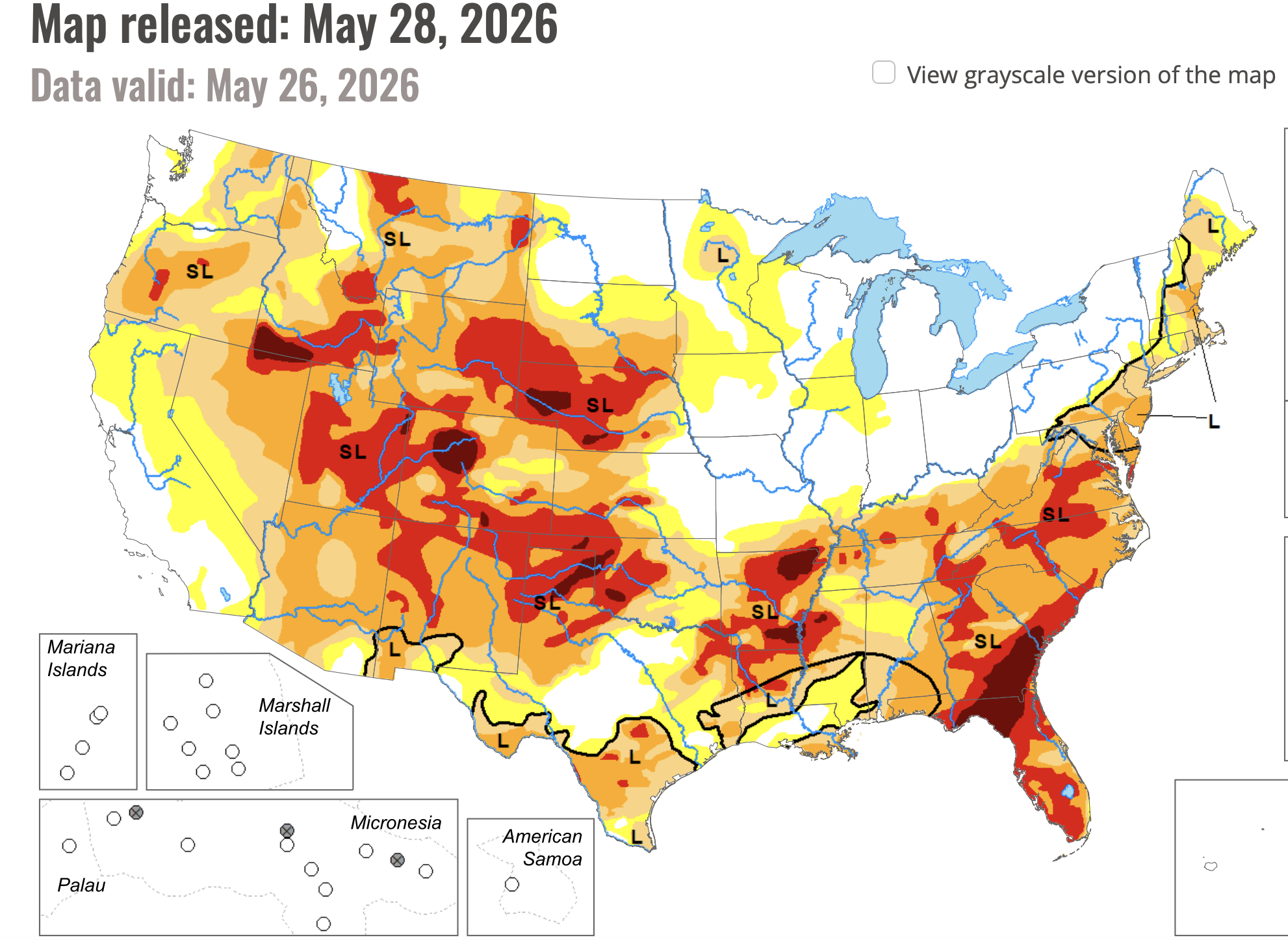
This week’s headlines have reinforced a growing global concern: grain production is becoming increasingly vulnerable to climate volatility. Reports of extreme heat and drought conditions across large parts of the United States come as the latest U.S. Drought Monitor shows more than 60% of the Lower 48 states affected by drought, with significant pressure across key grain and livestock regions.
At the same time, Europe is experiencing unusually early heatwaves, with temperatures reaching levels more commonly associated with mid-summer. Crop stress is already being reported in parts of France, Spain and the wider Mediterranean region.
For grain markets, the implications are straightforward. Corn, soybean and wheat production prospects are becoming increasingly weather-dependent at a critical point in the growing season. While some southern U.S. regions have received recent rainfall relief, substantial areas remain under severe drought classifications and soil moisture reserves are well below normal.
Tighter grain availability inevitably raises concerns over feed costs, export volumes and global stock levels. Import-dependent regions, including parts of North Africa and the Middle East, remain particularly exposed to any reduction in U.S. or European output. Grain traders are already watching weather forecasts more closely than acreage reports.
The knock-on effect for agricultural machinery manufacturers is more complex.
In the short term, elevated grain prices can improve farm profitability for growers with a crop to sell, supporting demand for combines, tractors and precision farming equipment. However, prolonged drought typically delays machinery replacement decisions as farmers preserve cash and reassess investment plans.
Across Europe, machinery markets are already dealing with softer order books after the post-pandemic boom. Manufacturers and dealers will be wary of any sustained reduction in crop yields that further pressures farm incomes. Meanwhile, contractors may benefit from increased demand for precision application technology, irrigation equipment and water-management solutions as growers adapt to more volatile weather patterns.
The wider message is clear. Climate risk is no longer a seasonal disruption; it is becoming a structural factor influencing grain availability, farm profitability and machinery purchasing decisions. For the global agricultural equipment sector, weather is rapidly becoming as important as interest rates, commodity prices and government policy.
Oh and have you heard about the mouse infestations in Australia.. Turn away if you don’t like mice.
Have a good week.
Andy