CLAAS, MAN Engines and WTZ Roßlau join forces on ammonia fuel research
A €3.2 million research partnership is bringing engine development and agricultural machine integration together to investigate ammonia as a future fuel for high-performance farm machinery.
CLAAS, MAN Engines and WTZ Roßlau are collaborating on GAMCO — Green Ammonia Multifuel Combine — with WTZ Roßlau leading the project. Running from 1 May 2026 to 31 October 2029, the programme is funded under the 8th Energy Research Programme through the project management organisation Forschungszentrum Jülich.
Combining engine and application expertise
The division of work links the powertrain to its intended operating environment. MAN Engines and WTZ Roßlau are responsible for developing the engine system, while CLAAS is working at Harsewinkel to integrate it into an agricultural machine.
The partners are targeting a demanding application: machinery that must deliver high power reliably over many hours. Potential uses include high-performance harvesting machinery and large tractors, where CLAAS expects energy-dense liquid fuels to remain important in the near future.
A wider role for renewable energy
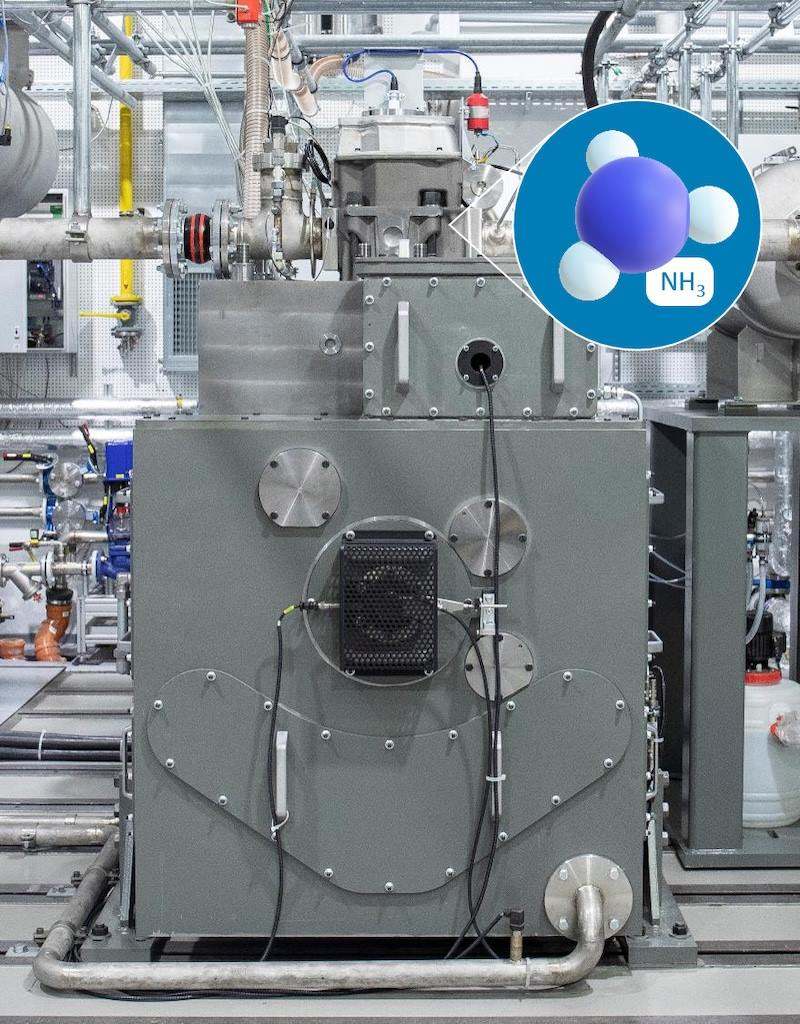
The project will examine ammonia as an alternative to fossil fuels and to other sustainable fuel options, including hydrogen. Ammonia can be produced using renewable energy in locations with low energy costs. The release identifies its energy density and relative ease of storage compared with hydrogen as reasons to investigate its role as a transport medium for green energy.
Those potential advantages do not settle the question of its suitability for agricultural machinery. Combustion, exhaust after-treatment, storage and safe handling all require investigation. GAMCO will also assess the complete well-to-wheel pathway, including how the fuels are produced and supplied.
The partnership therefore goes beyond developing an engine that can burn a different fuel. It connects engine research, machine integration and fuel-chain assessment to explore whether ammonia could become a practical part of agriculture’s future energy mix.
No single-fuel commitment
CLAAS presents the work as part of a technology-neutral approach, rather than a commitment to ammonia alone. HVO and, with appropriate approval, B100 biodiesel offer other routes using largely existing technology and infrastructure. Battery-electric machines already serve suitable lower-power applications.
For the trade, GAMCO is a research signal rather than a commercial launch. The programme aims to establish both the opportunities and the limitations of ammonia-powered engines before their potential role in future machinery can be understood.
Related news:
Tractor users’ views sought as researchers seek to boost safety