
Comment – What’s occurring?
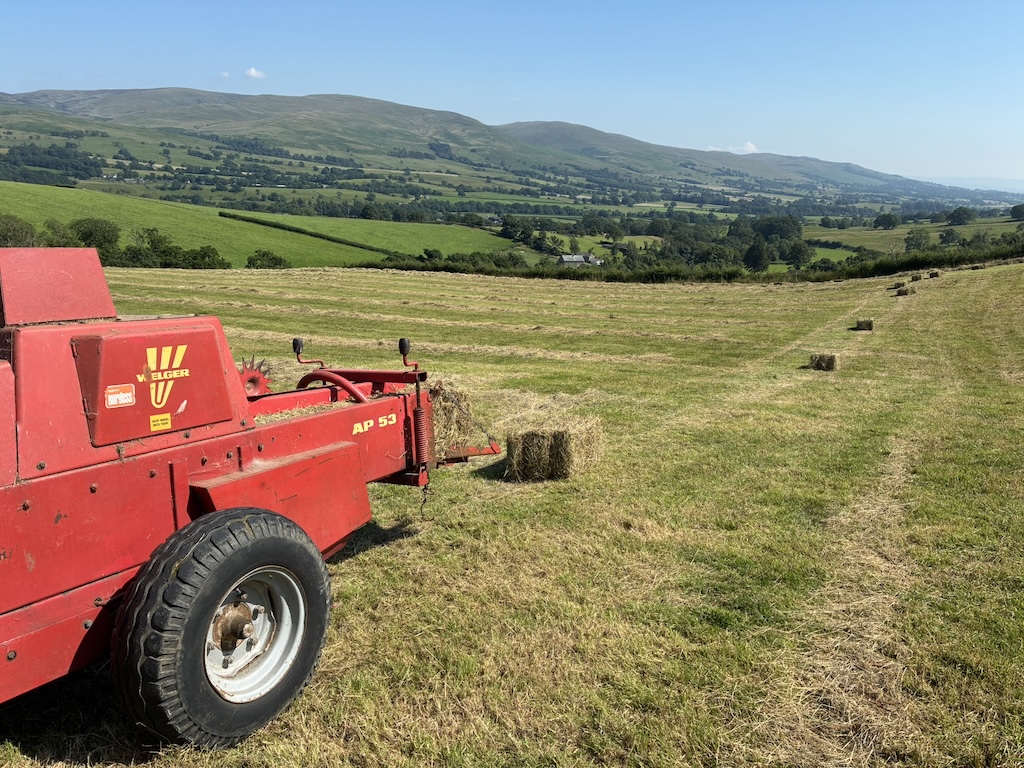
In a fit of apathy brought on by haymaking related exhaustion, I asked our friend Chat GPT ‘ What’s rocking the world of the agricultural machinery supply chain’ this week? And this is what I got..
Supply chain watch: What’s moving agricultural machinery this week?
This week, the agricultural machinery supply chain is being shaped less by factory production and more by geopolitics, energy markets and digital regulation.
Global: diesel costs return to the spotlight
Russia’s decision to suspend diesel exports has pushed diesel prices higher across international markets, creating fresh uncertainty for machinery manufacturers, transport operators and farmers alike. Although Europe has diversified its fuel sources since 2022, higher global diesel prices inevitably feed into freight costs, steel production, logistics and field operating costs. For machinery manufacturers already working on tight margins, another spike in transport costs could begin filtering through to component pricing during the second half of the year. (Global Banking & Finance Review)
Meanwhile, economists are also warning that a developing “super” El Niño could place further pressure on global food production through 2027, potentially influencing machinery demand as farm incomes fluctuate across different regions. (The Guardian)
Europe: resilience replacing growth
Across Europe, the conversation has shifted from expansion to resilience. The European Commission’s latest agricultural market outlook suggests farming remains fundamentally robust despite rising input costs and continued geopolitical uncertainty. At the same time, Brussels continues to strengthen monitoring of agricultural supply chains through the Agri-food Chain Observatory, reflecting concerns over fertiliser, energy and machinery costs. (Agriculture and rural development)
For machinery suppliers, this means customers are increasingly looking for technologies that reduce inputs rather than simply increase output. AI-guided spot spraying, precision drilling, automation and lower fuel consumption continue to dominate new product launches.
UK: dealers prepare for a technology-led autumn
In the UK, machinery manufacturers and dealers are entering the traditional pre-harvest launch period with an unusually strong emphasis on precision technology. Recent announcements from Claas, John Deere, Amazone, Kverneland, Pöttinger, Lemken and several precision retrofit specialists show manufacturers competing less on horsepower and more on automation, connectivity and operator support.
Artificial intelligence is also moving rapidly from concept to commercial reality. Spot spraying, adaptive transmissions, predictive automation and cloud-based fleet management are becoming mainstream options rather than flagship demonstrations.
The overall market remains cautious, however. High interest rates, modest grain prices and variable weather continue to delay replacement decisions for many businesses. As a result, manufacturers are increasingly focusing on technologies that deliver measurable savings in labour, fuel and inputs, offering farmers a clearer return on investment rather than simply more machine capacity. That shift is likely to define the remainder of 2026.
I’m not sure I’m buying the ‘technology led autumn’ bit, but its not bad otherwise.. Oh and remember its scraping the internet for these answers, its not really sucking on its pencil and thinking..
Speaking of El Niño, I’m not really sure what that means for the UK’s weather, but the uncertainly and potential damage to crop yields around the globe must surely put a firm foundation in commodity prices. I asked google this one and was sent in the direction of the UK Parliament website here. Spoiler alert, the government has shrugged and said ‘dunno’ whilst looking for the plate of taxpayer funded chocolate digestives.
Have a great week, I’m loving the sunshine, as I know it won’t last that long!
Andy


