
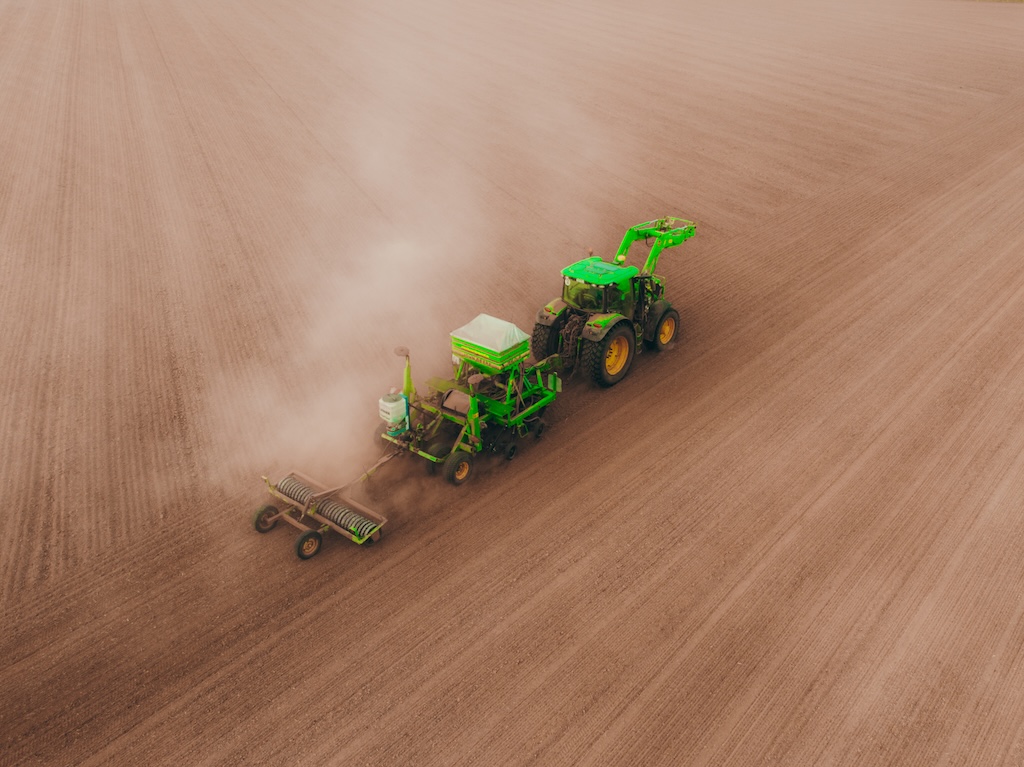
August roundup: global pressures, European recovery and a stronger UK machinery market
August has brought further evidence that the global agricultural machinery market may be approaching the bottom of its current cycle. For the UK supply chain, however, the picture is complicated by continuing trade tensions, higher tariff costs and a rapidly changing international manufacturing environment.
Global: signs of recovery, but tariffs remain a major risk
The biggest story internationally is the increasingly cautious optimism emerging from the major machinery manufacturers.
John Deere has raised its 2026 profit outlook after reporting its first quarterly increase in profit for three years. The company’s Production and Precision Agriculture division remains under pressure, with sales falling 6% in the latest quarter, but Deere believes the current year could represent the low point of the agricultural machinery cycle.
The company’s outlook is particularly relevant to the wider machinery supply chain. Deere expects tariff costs of around $750m in 2026, rising to $1bn in 2027, underlining the continued importance of trade policy to machinery pricing and component sourcing.
CNH has delivered a similarly cautious message. Second-quarter revenue increased 2% to $4.8bn, while agricultural equipment sales remained broadly flat at $3.3bn. However, the company has narrowed its full-year guidance towards the upper end of its previous expectations.
Chief executive Gerrit Marx pointed to normalising dealer inventories, ageing machinery fleets and a more balanced relationship between new and used equipment prices as encouraging signs.
For manufacturers and suppliers, the message is that the market is stabilising, but recovery remains fragile. North American demand for high-horsepower tractors and combines remains weak, while manufacturers continue to manage production levels and dealer inventories carefully.
Trade remains the biggest uncertainty. Tariffs on steel, aluminium, components and finished machinery are increasingly affecting sourcing decisions and production costs. The wider dispute between the US and its trading partners also remains a concern for global manufacturers with complex cross-border supply chains.
Europe: expectations improve as the market looks ahead
The European agricultural machinery market remains below historic levels, but confidence is beginning to improve.
The latest CEMA business barometer for August reports that future expectations are improving again. This follows several months in which the European machinery sector has been operating in recessionary territory, with manufacturers adjusting production and inventories to lower demand.
The improvement is significant for UK suppliers because European manufacturing remains fundamental to the machinery sold in Britain. Tractors, combines, implements, engines, transmissions, electronics and components continue to move through highly integrated European supply chains.
The European outlook is also being shaped by trade policy. The EU-US agreement has eased some immediate tariff concerns, although questions remain over steel and aluminium derivatives and the longer-term impact of protectionist measures on manufacturing costs.
For machinery manufacturers, the challenge is no longer simply component availability, as it was during the post-pandemic supply shortages. The focus has shifted towards the cost and location of production, tariffs, exchange rates and maintaining profitable production volumes during a weak market.
UK: registrations provide a welcome boost
Against this backdrop, the UK agricultural machinery market has delivered a notably stronger performance.
The latest figures from the Agricultural Engineers Association show 934 tractors of 50hp and above were registered in July, a 6.1% increase on July 2025. For the first seven months of the year, registrations reached 6,889 units, up 19.8% year-on-year.
The increase suggests that farmers and contractors are beginning to invest again after a prolonged period of subdued machinery purchasing.
However, the registration figures should be treated with some caution. Orders placed during earlier periods, dealer stock availability and changes in delivery patterns can all affect monthly totals.
For the UK supply chain, nevertheless, the trend is encouraging. Stronger machinery registrations support demand not only for manufacturers and dealers, but also for implement suppliers, component manufacturers, tyre companies, precision farming specialists and the wider service sector.
The supply chain message
The key message from August is that the machinery industry appears to be moving from contraction towards stabilisation.
Global manufacturers are beginning to see the bottom of the cycle, European confidence is improving and the UK market has recorded a significant increase in tractor registrations.
The next challenge will be determining whether improving demand can be translated into a sustained recovery while manufacturers continue to face higher tariffs, volatile trade relationships and pressure on production costs.
For the UK agricultural machinery supply chain, the immediate outlook is more positive than it has been for some time. But the route to recovery remains dependent on factors well beyond the farm gate.
And with that I shall bid you farewell, as a bank holiday weekend in the trailer tent beckons. That should be sufficient to bring on the rain!
Have a good week and I shall look forward to catching up in September.
Andy


